
About Aanandi Kutumb Samriddh Gram
Aanandi Kutumb Samriddh Gram (AKSG) is a long-term programme that seeks to establish family-centred village self-governance through Chetana Vikas Mulya Shiksha (Value Education), based on Madhyasth Darshan.
The programme brings together participating families, communities and organisations to explore how education can become the foundation of a humane social system, where individuals understand their responsibilities and families actively participate in community life.
AKSG proposes an integrated approach to human development, connecting education with everyday conduct, productive work and social organisation.
Our Vision
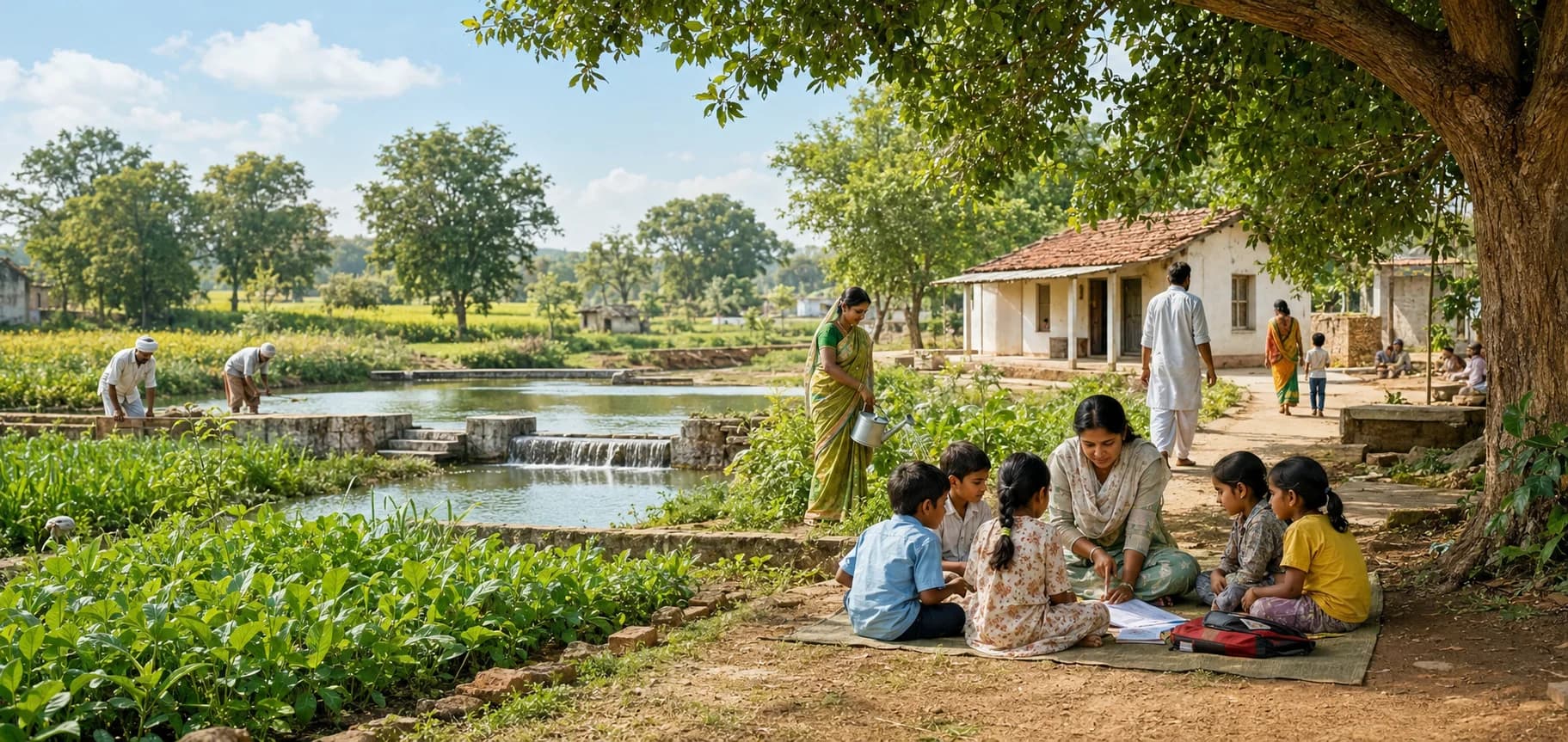
To establish a humane, family-centred social order in which individuals live with resolution, families experience prosperity, society is characterised by fearlessness and human beings live in coexistence with nature.
This vision is expressed through four human goals proposed in Madhyasth Darshan.
- ResolutionRight understanding and clarity within the individual, providing the basis for responsible thought, behaviour and participation.
- ProsperityThe assurance of having more physical resources than the family's assessed needs, through responsible production.
- FearlessnessThe presence of mutual trust and justice in relationships, within families and throughout society.
- CoexistenceUnderstanding the relationship between human beings and the rest of nature, and living in mutual fulfilment.
Our Mission
To develop a practical, education-led approach to village self-governance in which families become capable of fulfilling their responsibilities towards themselves, their communities and nature.
The programme seeks to establish a basis for:
- Right understanding and humane conduct through value education.
- Trust, justice and responsibility within family and social relationships.
- Prosperity through productive work and the appropriate use of resources.
- Collective participation in family-centred social arrangements.
- Mutual fulfilment between human communities and nature.
The long-term objective is to support the development of self-reliant communities that can take responsibility for their collective wellbeing.
Rooted in Madhyasth Darshan
AKSG draws its philosophical foundation from Madhyasth Darshan (Sah-Astitva-Vad).
Madhyasth Darshan presents a proposal for understanding existence, the human being and human participation in relationships, society and nature. It considers right understanding to be the basis of humane conduct.
Chetana Vikas Mulya Shiksha is proposed as an educational process through which individuals can study themselves, recognise values in relationships and understand their participation in the larger social and natural order.
For AKSG, this provides the foundation for exploring how education can contribute to humane social arrangements, beginning with the individual and the family.
Foundational Principles
Reference: Madhyasth Darshan, Sah-Astitva-Vad, Shri A. Nagraj.
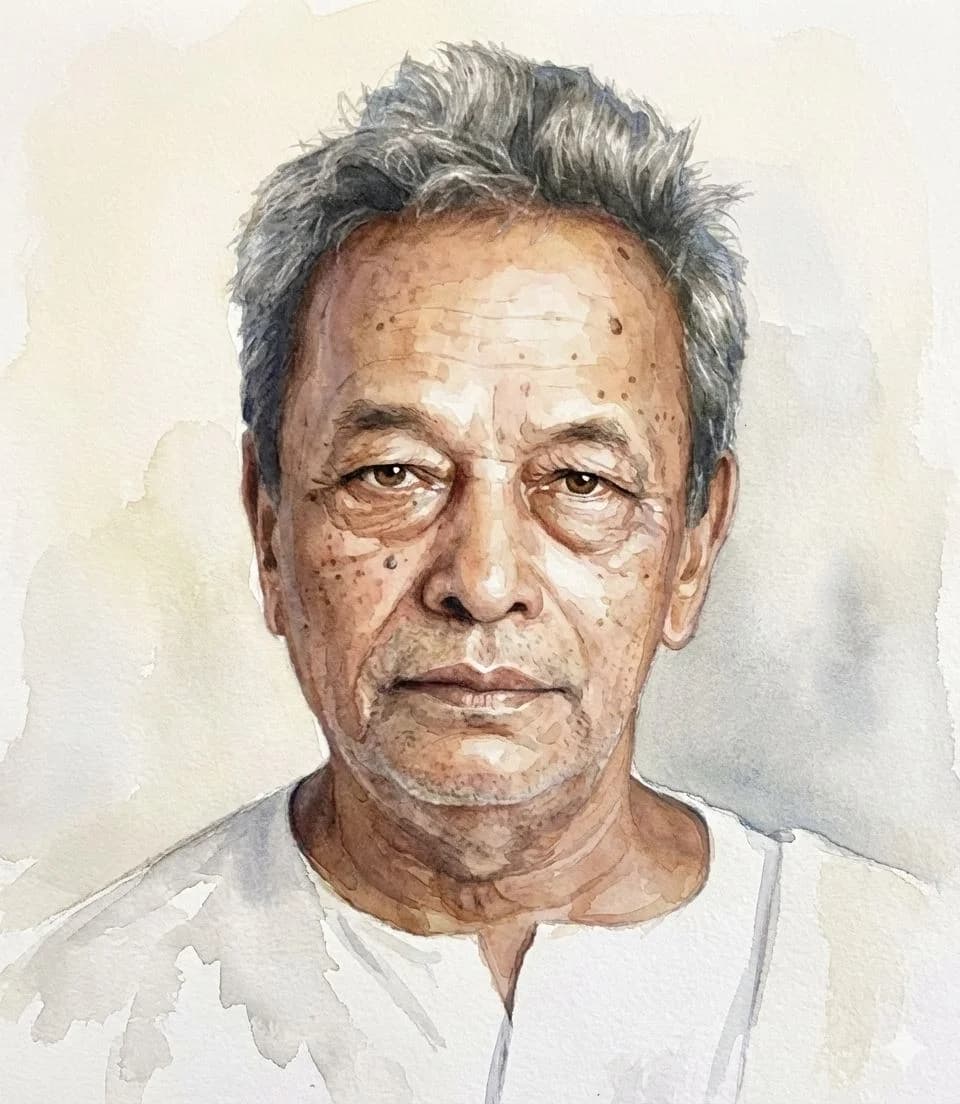
Propounder of Madhyasth Darshan, Sah-Astitva-Vad
Shri A. Nagraj Ji1920–2016
Shri A. Nagraj Ji devoted his life to understanding human existence, happiness and harmony. Through sustained enquiry and contemplation, he presented Madhyasth Darshan (Sah-Astitva-Vad), a proposal for living with right understanding in harmony with oneself, family, society and nature.
His work provides the philosophical foundation for Jeevan Vidya, through which individuals can study and understand human life, relationships and coexistence.
Aanandi Kutumb Samriddh Gram draws upon this understanding in its approach to value education and family-centred village development.
“Existence is Coexistence.”
Two Areas of Human Relationships
The AKSG proposal examines contemporary human challenges through two fundamental areas: relationships among human beings and relationships between human beings and the rest of nature.
01. Human–Human Relationships
- Mistrust, conflicts, lack of dialogue within families, social divisions and competition affect relationships at individual, family and societal levels.
02. Human–Rest of Nature Relationships
- Deforestation, pollution, depletion of natural resources, loss of biodiversity and chemical-intensive production practices reflect challenges in the relationship between human activity and the rest of nature.
Proposed Direction
Human–Human Relationships
- The programme proposes developing right understanding as the basis for recognising relationships, fulfilling human values and establishing justice and mutual trust.
- Proposed direction: From mistrust and conflict towards trust, justice, meaningful dialogue and mutually fulfilling relationships.
Human–Rest of Nature Relationships
- The programme proposes conservation, enrichment of natural resources, responsible consumption and production based on natural cycles.
- Proposed direction: From resource depletion and environmental imbalance towards conservation, cyclical production and responsible use of natural resources.
The programme considers these challenges interconnected and proposes value education as a common foundation for addressing them.
From Education to Self-Governance
The AKSG approach follows a progression from the development of understanding in the individual to its expression in family life, society and human systems.
This progression places education at the beginning of social development, with the family recognised as the basic unit of human organisation.
The practical expression of this approach is proposed through the AKSG Model Village programme.
Villages and Cities as Complementary Communities
AKSG recognises that villages and cities have different capabilities and responsibilities within a larger human system. Their development can be mutually supportive through the exchange of knowledge, skills, resources and productive contributions.
Contribution of Villages
- Villages contribute through agriculture, local production, the conservation and enrichment of natural resources, community cooperation and practical knowledge of living in relationship with nature.
Contribution of Cities
- Cities contribute through higher education, scientific research, technical expertise, specialised skills, management capabilities and distribution systems.
The programme proposes that these capabilities be organised in a mutually fulfilling manner, supporting local self-reliance while recognising the interdependence of rural and urban communities.