One EarthOne NationOne Family
A programme for family-centred village self-governance, based on Madhyasth Darshan and its proposal of Chetana Vikas Mulya Shiksha (Value Education).
AKSG brings together individuals, families and communities to develop understanding, mutual trust, responsible production and participation in village systems, with the aim of establishing happy families and prosperous villages.
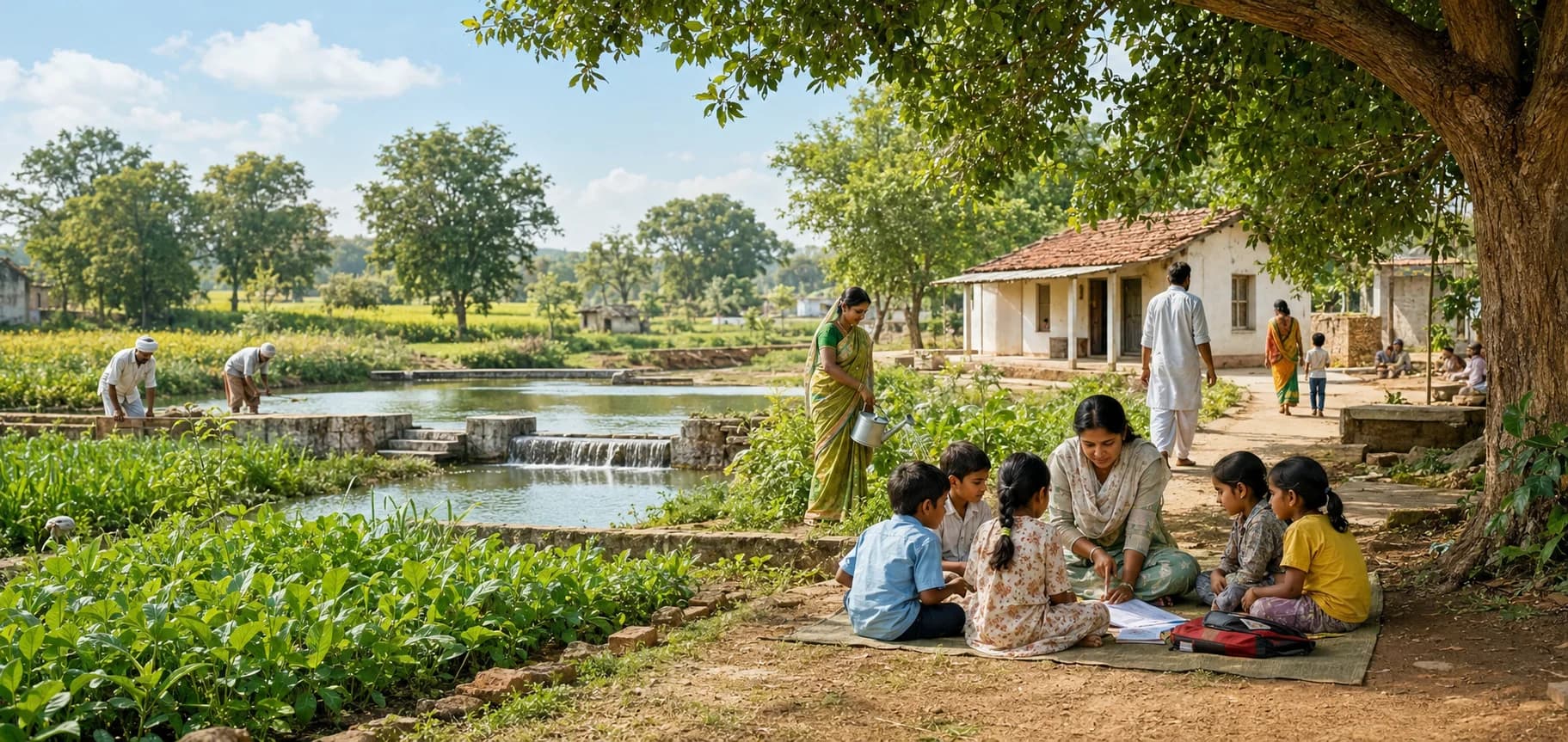
Why AKSG?
The quality of life in a village depends not only on infrastructure and economic opportunities, but also on relationships, understanding, health, local production and the responsible use of natural resources.
The AKSG programme considers two fundamental areas of human participation.
Understand Our ApproachHuman–Human Relationships
- Relationships within families and communities are the foundation of social life. Trust, justice, dialogue and cooperation are essential for individuals and families to live with mutual fulfilment.
Human–Nature Relationships
- Human beings depend on nature for nourishment, shelter and the materials needed for living. Conservation, responsible production and the regeneration of natural resources are necessary for a sustainable way of life.
Addressing these relationships together forms the basis of the AKSG approach.
Family-Centred Self-Governance
AKSG recognises the family as the basic unit of human organisation. Through value education, families can develop the understanding and responsibility needed to participate meaningfully in their communities.
The programme proposes that families and village communities progressively take responsibility for education, health, production, exchange and justice through collective participation and local decision-making.
It also recognises the complementary roles of villages and cities. Villages contribute through local production, natural resources and community life, while cities contribute through higher education, research, technology, distribution and institutional capabilities.
This mutual contribution supports the development of a family-centred, self-reliant and cooperative human system.
Five Dimensions of Human Organisation
Based on Madhyasth Darshan, the AKSG framework brings together five interconnected dimensions that address human needs at the individual, family and community levels.
Education & Sanskar
Developing right understanding, human values, relationship awareness, behavioural competence and practical skills through value education and technical learning.
Health & Self-Regulation
Encouraging balanced living, healthy food habits, physical wellbeing, preventive health practices and responsibility for one's health.
Production & Work
Strengthening practical skills, productive participation, natural farming and local production while conserving and enriching natural resources.
Exchange & Community Fund
Developing fair exchange, responsible management of resources, collective funds and the appropriate use of surplus for community prosperity.
Justice & Security
Building trust through recognition of relationships, fulfilment of human values, fair evaluation and mutually satisfying interactions within families and communities.
How the Programme Takes Shape
The AKSG programme follows a participatory approach in which families, Gram Panchayats, educators, local organisations and volunteers work together.
The initial five-year phase focuses on establishing value education, encouraging family participation and developing activities across the five dimensions.
The implementation process includes:
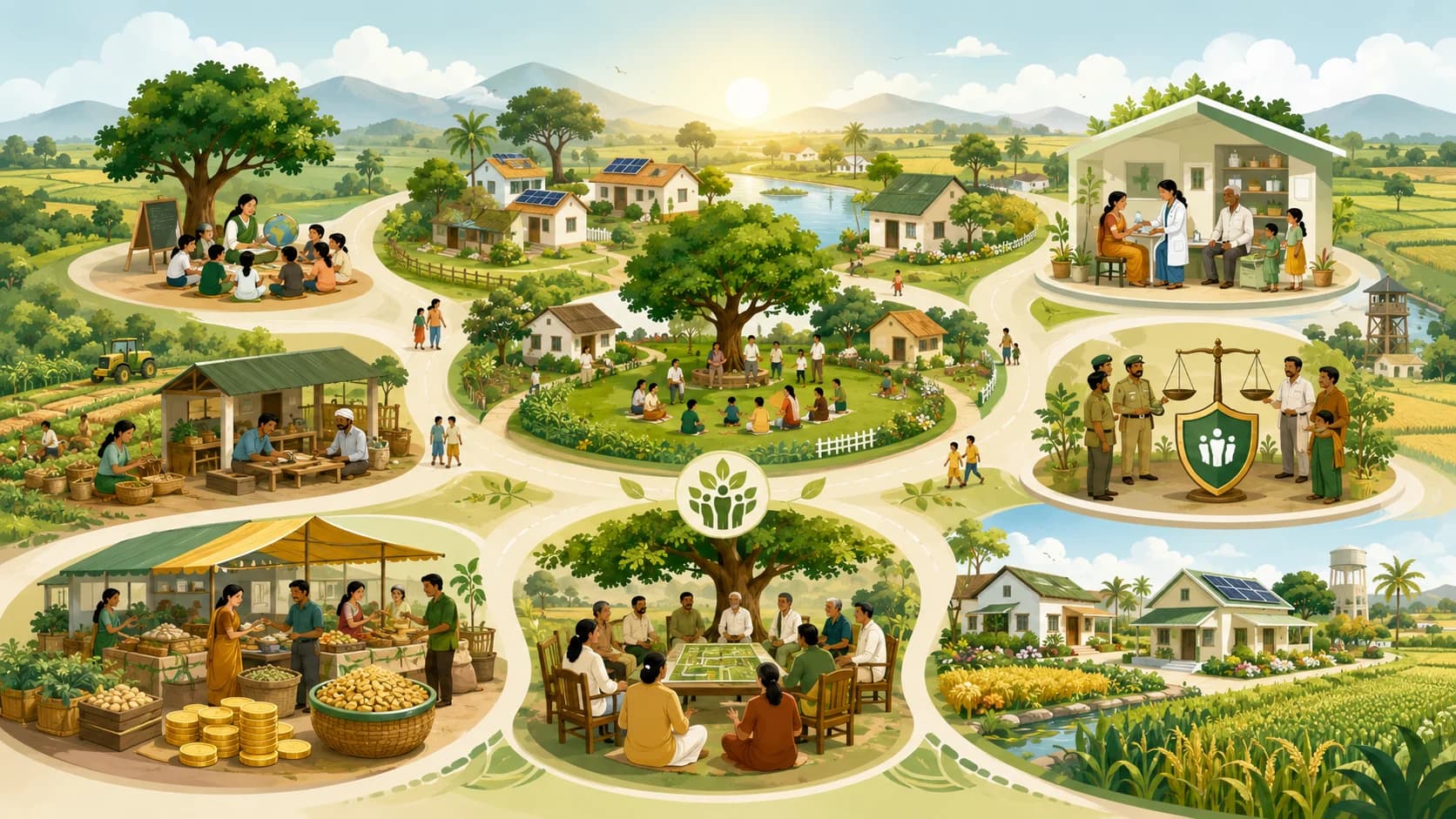
The longer-term vision is to develop village communities capable of managing their collective responsibilities with increasing understanding, cooperation and self-reliance.
How the Model WorksOrganisations Working Together
AKSG is supported by organisations working in Madhyasth Darshan studies, value education, natural farming, rural development, research and community initiatives.
Their respective experience and resources contribute to developing, implementing and studying the programme in village communities.
View Partner Organisations

Learning from Village Experiences
Village communities across India have developed different approaches to resource conservation, local participation, farming and community development.
These case studies bring together experiences and learnings relevant to the AKSG programme.
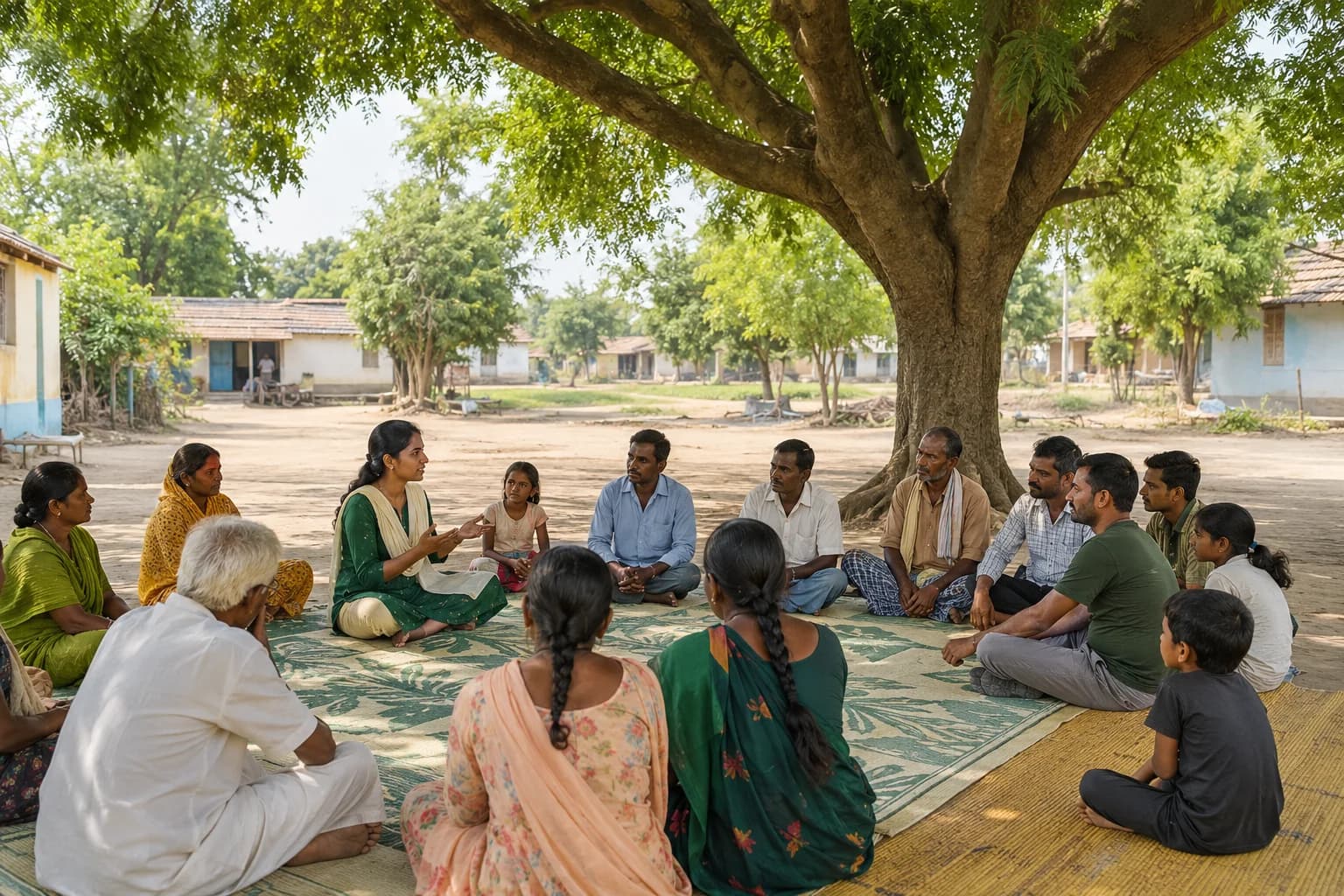
Hiware Bazar, Maharashtra
A village known for watershed development, community participation, water conservation and local self-governance.
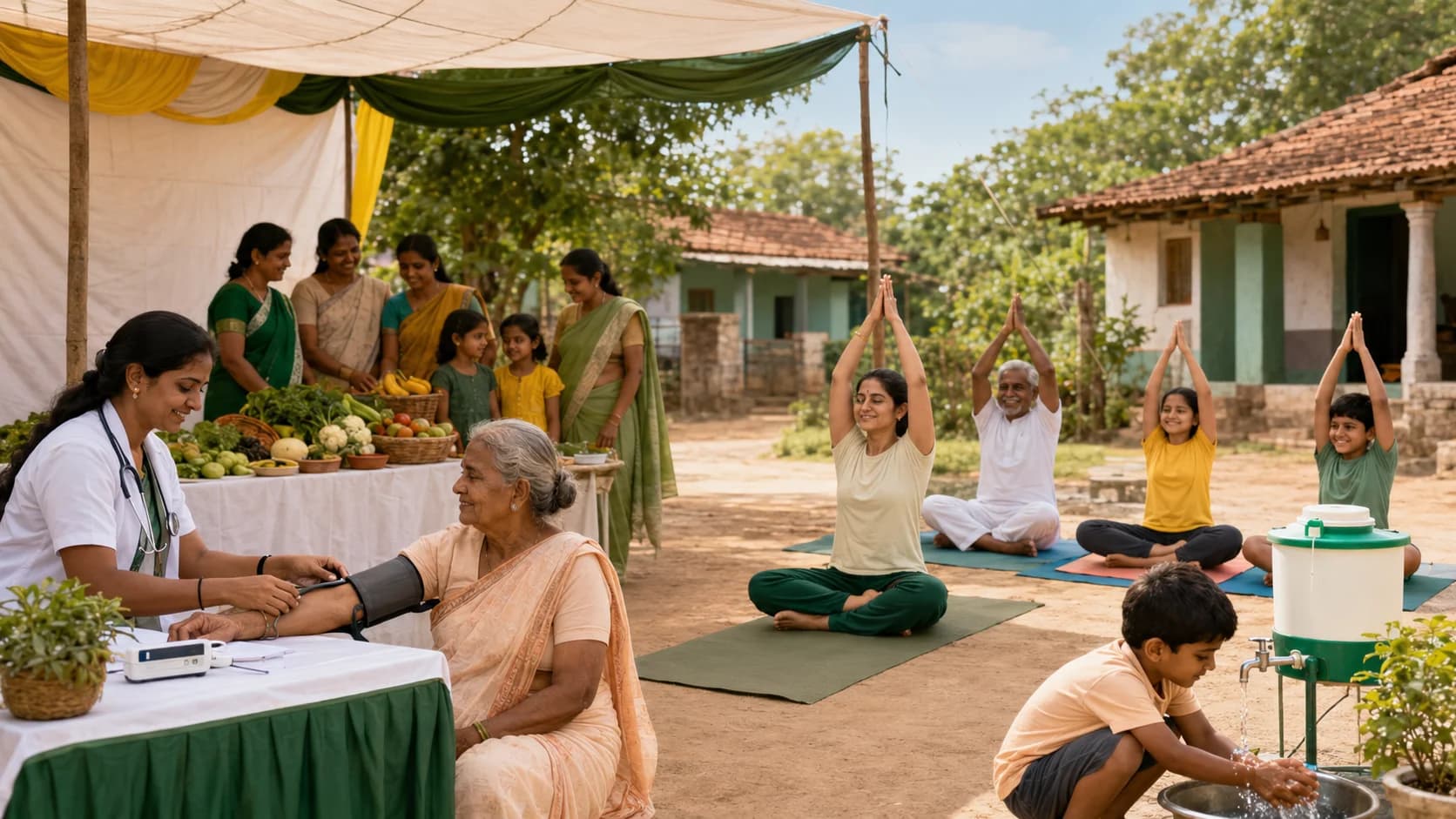
Bodra, Chhattisgarh
Community engagement through Jeevan Vidya discussions, family participation and village-level activities across the five dimensions.
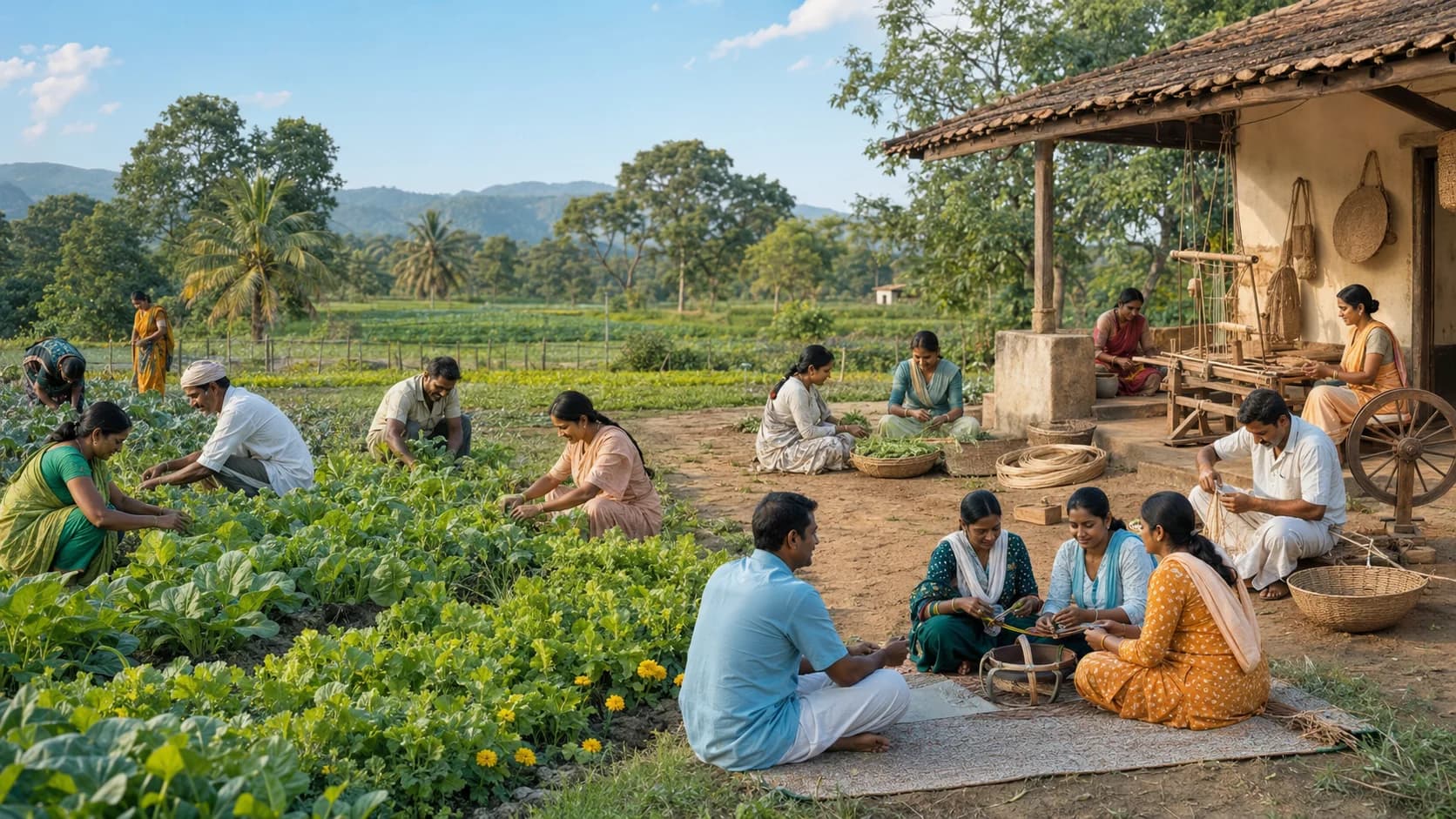
Awari, Chhattisgarh
Exploring natural farming, soil health, practical agriculture and the use of local resources through village-based activities.
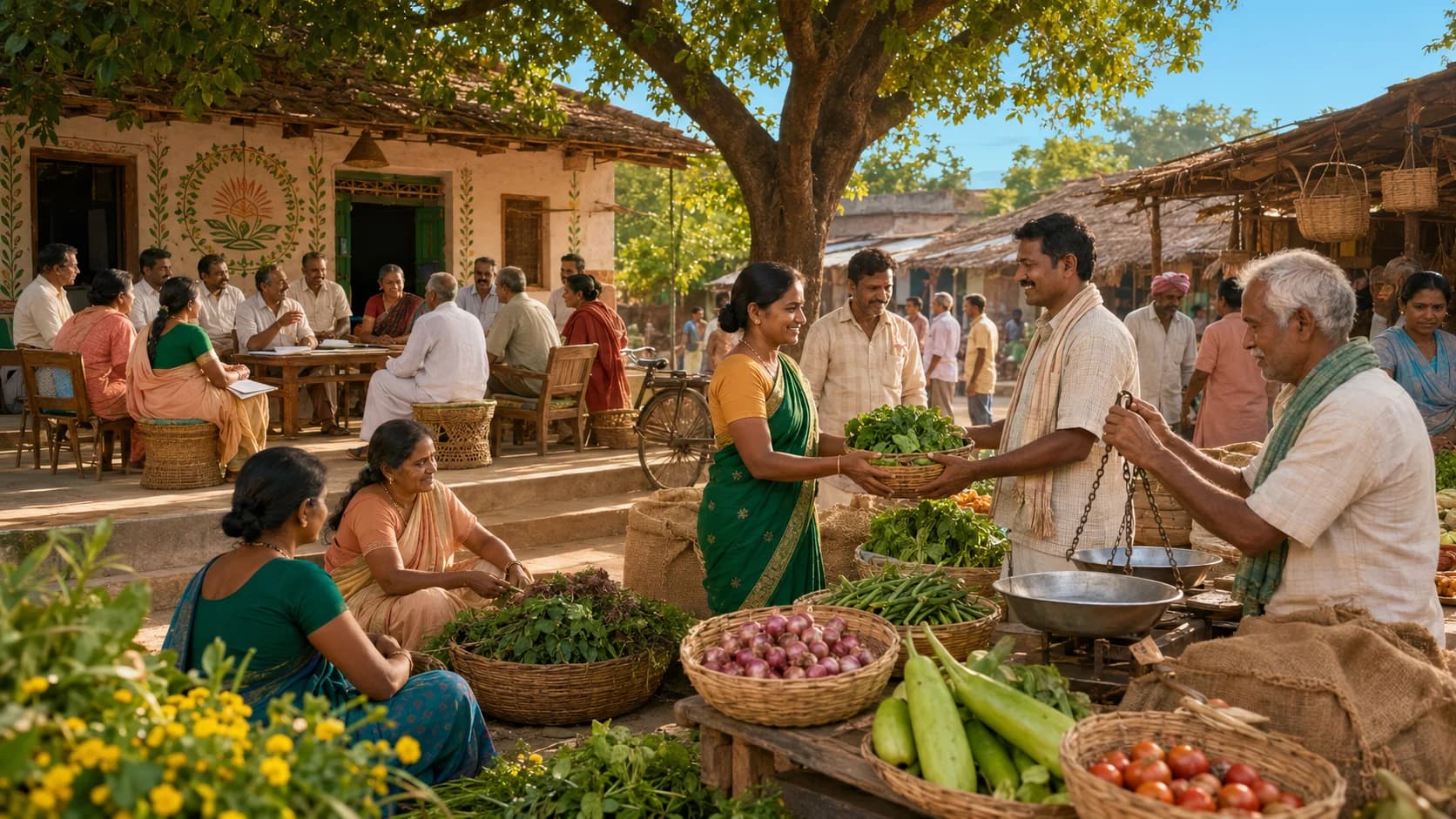
Gujra, Chhattisgarh
Community participation and local water conservation activities informed by village development experiences.
Participate in AKSG
The programme welcomes individuals, families, educators, organisations and practitioners who wish to contribute to village development through value education and community participation.
Depending on their interests and capabilities, participants can contribute through study, volunteering, village coordination, farming, technical knowledge, documentation and organisational collaboration.