Hiware Bazar
Watershed Development and Community-Led Village Governance
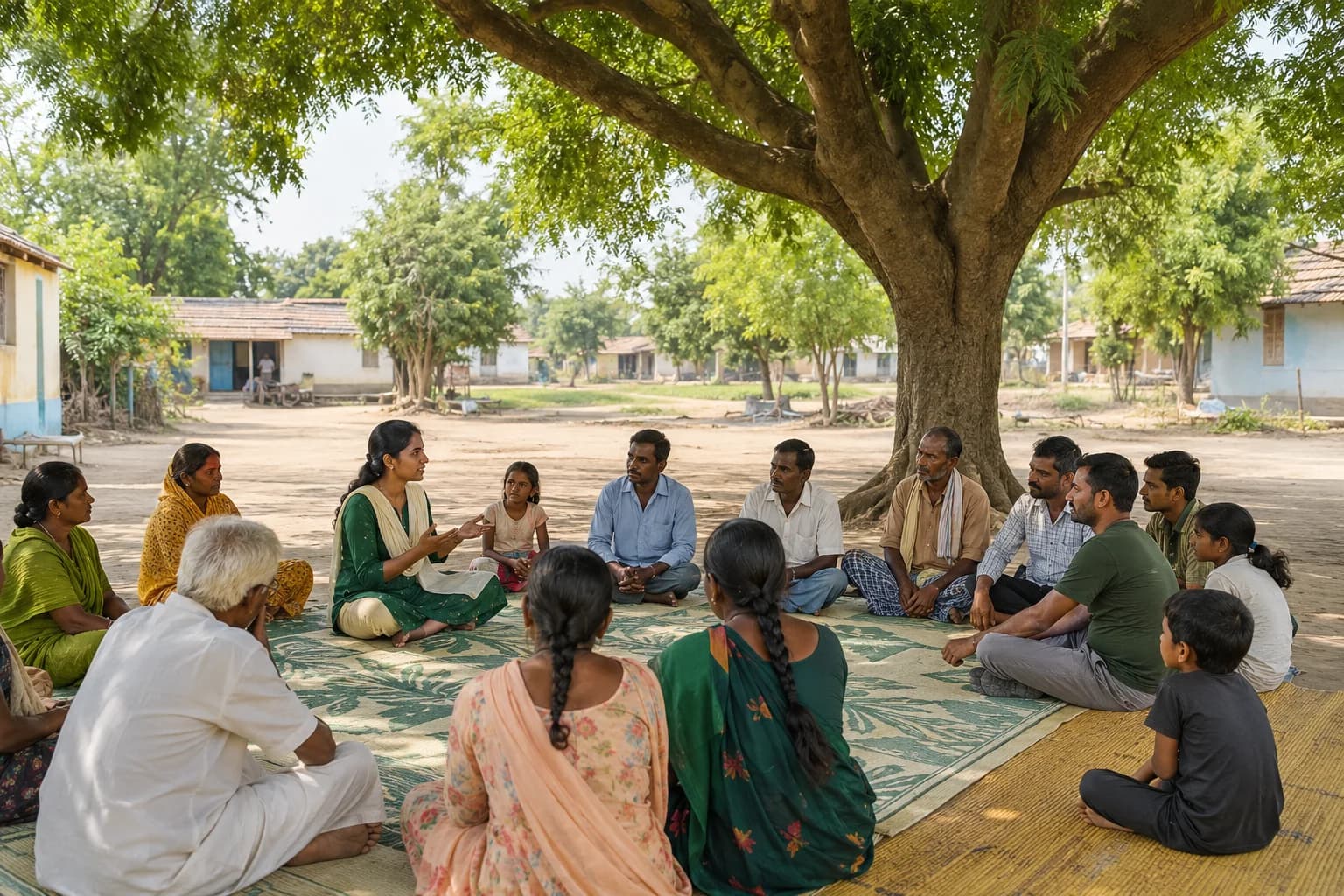
Hiware Bazar in Maharashtra's Ahilyanagar district is known for its work in water conservation, agricultural development and participatory governance.
Beginning in the late 1980s, the village undertook a sustained programme of community mobilisation, watershed management and responsible resource use. Its experience demonstrates how local leadership, collective decisions and long-term planning can support rural development.
Hiware Bazar at a Glance
Ahilyanagar, Maharashtra
1,250 residents · 235 households
Yashwant Krishi Gram and Watershed Development Trust
Watershed management, water budgeting, agriculture and Gram Sabha participation
Water Scarcity and Its Effects on Village Life
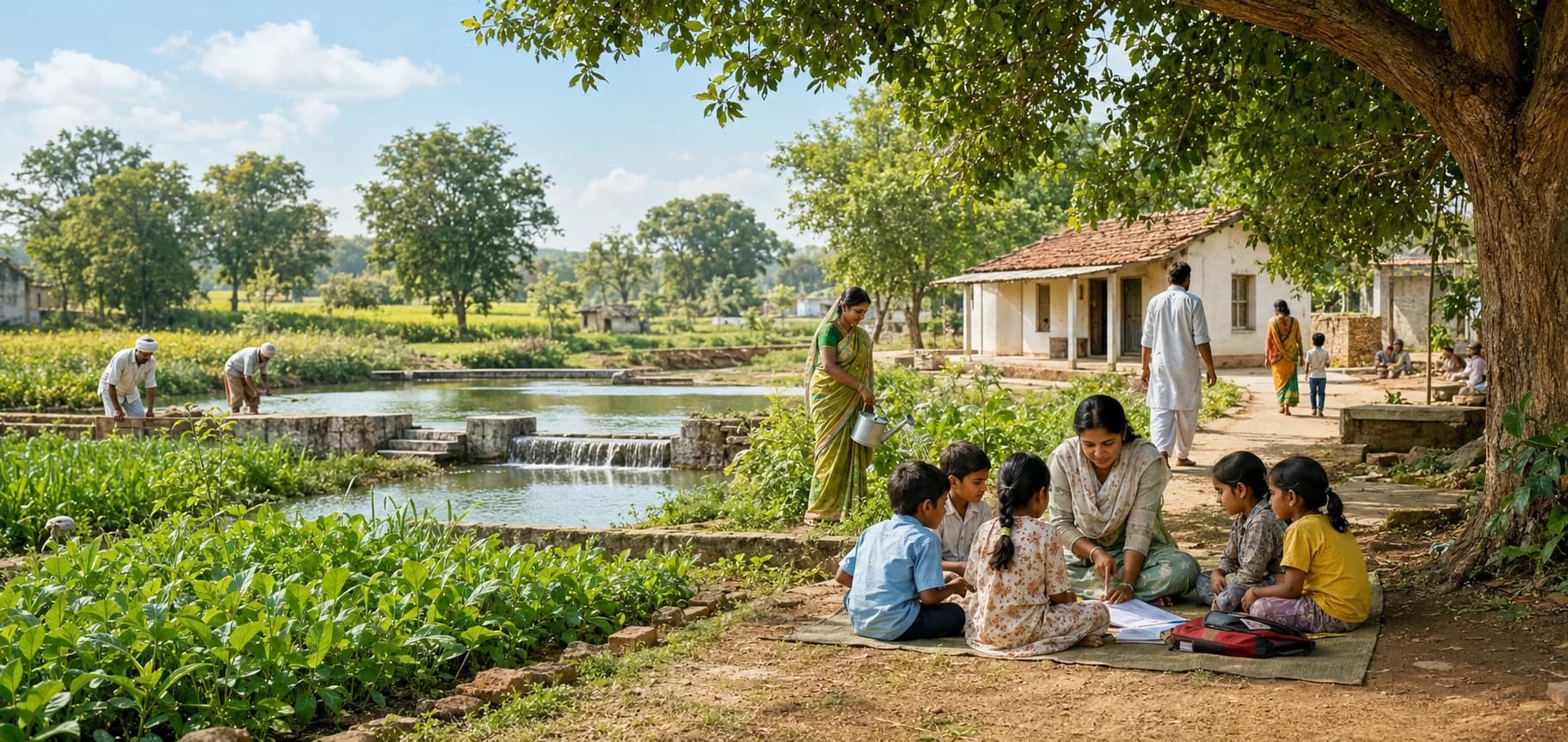
Between 1972 and 1989, Hiware Bazar experienced repeated droughts, soil erosion and declining agricultural productivity. Limited water availability affected farming, fodder production and employment.
Seasonal migration, inadequate access to basic services and social difficulties added to these challenges.
Water scarcity influenced not only agriculture but also livelihoods, economic security and the functioning of village institutions.
The Development Journey
Education and Community Participation
In 1989, Popatrao Pawar was selected as Sarpanch. The Gram Sabha meeting of 26 January 1990 identified priorities that included water, education, healthcare, employment, roads and electricity.
Education received early attention. The primary school was upgraded to a high school, with 18 residents contributing land for educational facilities.
In 1994, the Yashwant Krishi Gram and Watershed Development Trust was established to support village development work.
The community also adopted five commitments.
Water Conservation and Agriculture
The village developed watershed structures including contour trenches, bunds, check dams and percolation tanks.
These were accompanied by plantation work and water-use measures such as prioritising drinking water, discouraging water-intensive crops and planning agricultural activities according to rainfall.
The initiatives contributed to improvements in water availability and the area under irrigation.
Livelihood Development
Improved water availability supported further agricultural activity, horticulture and dairy farming.
The village also developed women's savings groups, dairy organisations, youth clubs and cooperative arrangements, creating additional opportunities for local participation.
Water Budgeting and Continued Learning
Hiware Bazar adopted water budgeting to estimate rainfall, groundwater recharge and water demand.
This helped the village plan water use in relation to available resources.
Its experience subsequently attracted Gram Panchayat representatives, researchers, social organisations and others interested in studying participatory village development.
Changes in Village Development
| Indicator | Before Development | Reported Progress |
|---|---|---|
| Literacy | 30% | 95% |
| Functioning Wells | 97 | 280 |
| Protective Irrigation | 125 ha | 624 ha |
| Summer Irrigation | 7 ha | 120 ha |
| Drip & Sprinkler Irrigation | 0 ha | 150 ha |
| Milk-Producing Animals | 19 | 476 |
| Daily Milk Collection | 140 L | ≈3,000 L |
| Fodder Availability | 1,500 tonnes | 6,000 tonnes |
| Per-Capita Income | ₹832 | ₹28,893 |
Community Decisions and Long-Term Participation
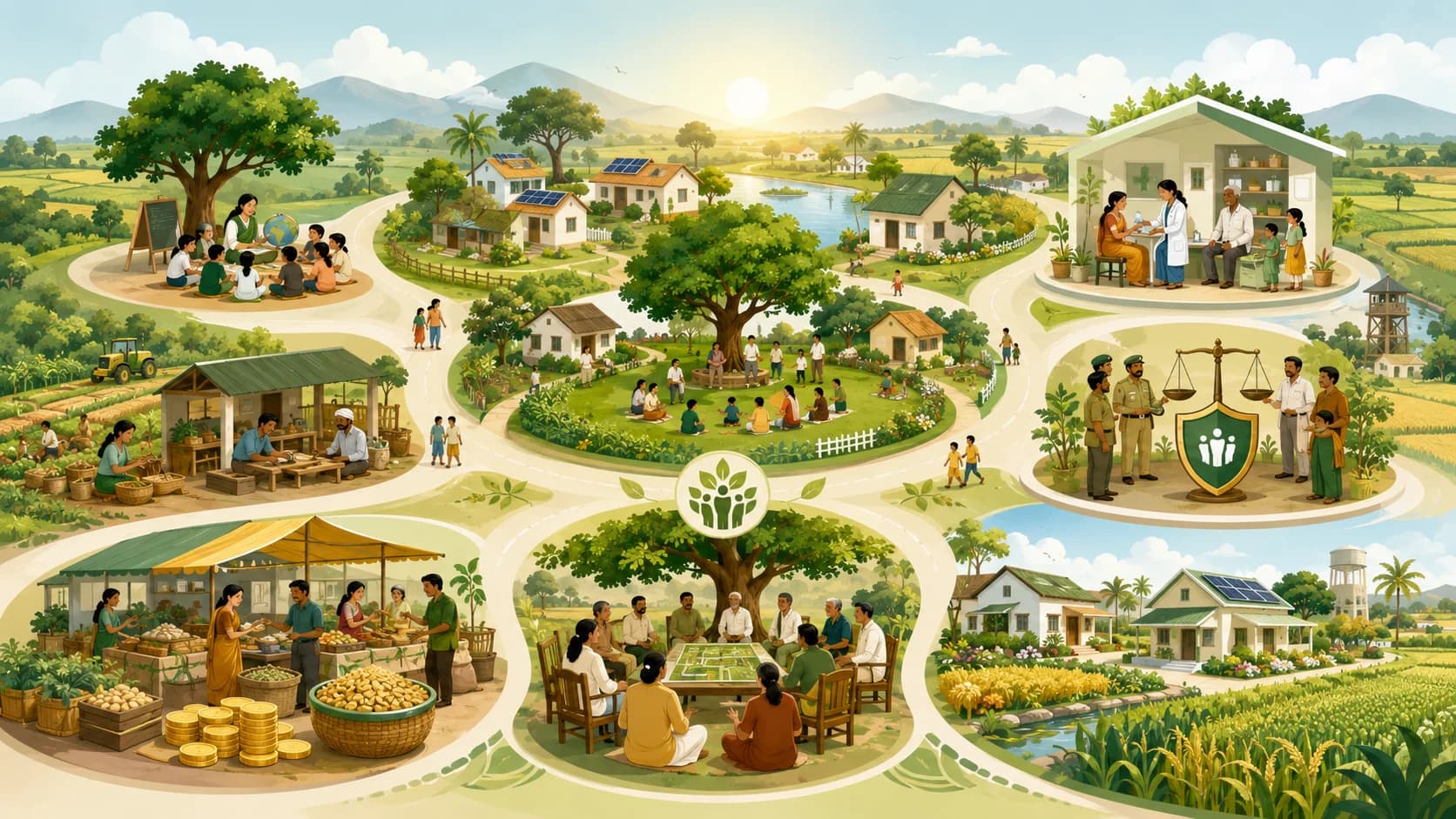
Gram Sabha ParticipationVillage priorities were discussed collectively, providing a basis for local planning and decisions.
Water Conservation and Water DisciplinePhysical conservation structures were supported by practices governing water use and agricultural planning.
Community ContributionResidents contributed labour, land and participation to development activities.
Coordination with InstitutionsLocal initiatives were supported through cooperation with public programmes and village organisations.
ContinuityThe development process extended across several decades, allowing practices and institutions to evolve.
Development Priorities: 2026–2046
The next phase of development considers how the village's existing experience can contribute to broader family and community participation.
Proposed areas of work include strengthening value education, increasing family participation in local decision-making, continuing water and soil conservation, developing responsible production practices and examining community arrangements for collective wellbeing.
The 2026–2046 period provides a long-term horizon for integrating these activities with the village's existing institutions and capabilities.
Learning from Hiware Bazar
Hiware Bazar's experience provides an opportunity to understand how local leadership, resource management and sustained community participation can contribute to village development.
The decisions, institutions and practices developed over time offer useful learning for other communities, while recognising that each village must work according to its own circumstances.