Gujra
Community-Led Water Conservation Following a Village Exposure Visit
Gujra, located in Chhattisgarh's Balod district, has undertaken water conservation activities following a learning visit to Hiware Bazar in Maharashtra.
The initiative developed through the involvement of village leadership and residents interested in improving local water management.
Gujra at a Glance
Daundi Block, Balod, Chhattisgarh
Sarpanch Parvati Mandavi
Hiware Bazar, Maharashtra
8–10 December
Community participation in water conservation
Watershed structures and local water management
Learning from Hiware Bazar
Sarpanch Parvati Mandavi participated in a workshop at Hiware Bazar held from 8 to 10 December.
During the visit, participants observed the village's work in watershed development, water conservation and community involvement in natural resource management.
The experience provided an opportunity to understand how local leadership, village-level planning and residents' participation can contribute to water management.
After returning to Gujra, the Sarpanch initiated discussions on how relevant practices could be adapted to the village's own circumstances.
The focus was on identifying approaches suitable for Gujra rather than reproducing the Hiware Bazar model without considering local conditions.
Beginning Water Conservation Work
Following the exposure visit, village leadership encouraged residents to participate in developing local water conservation structures.
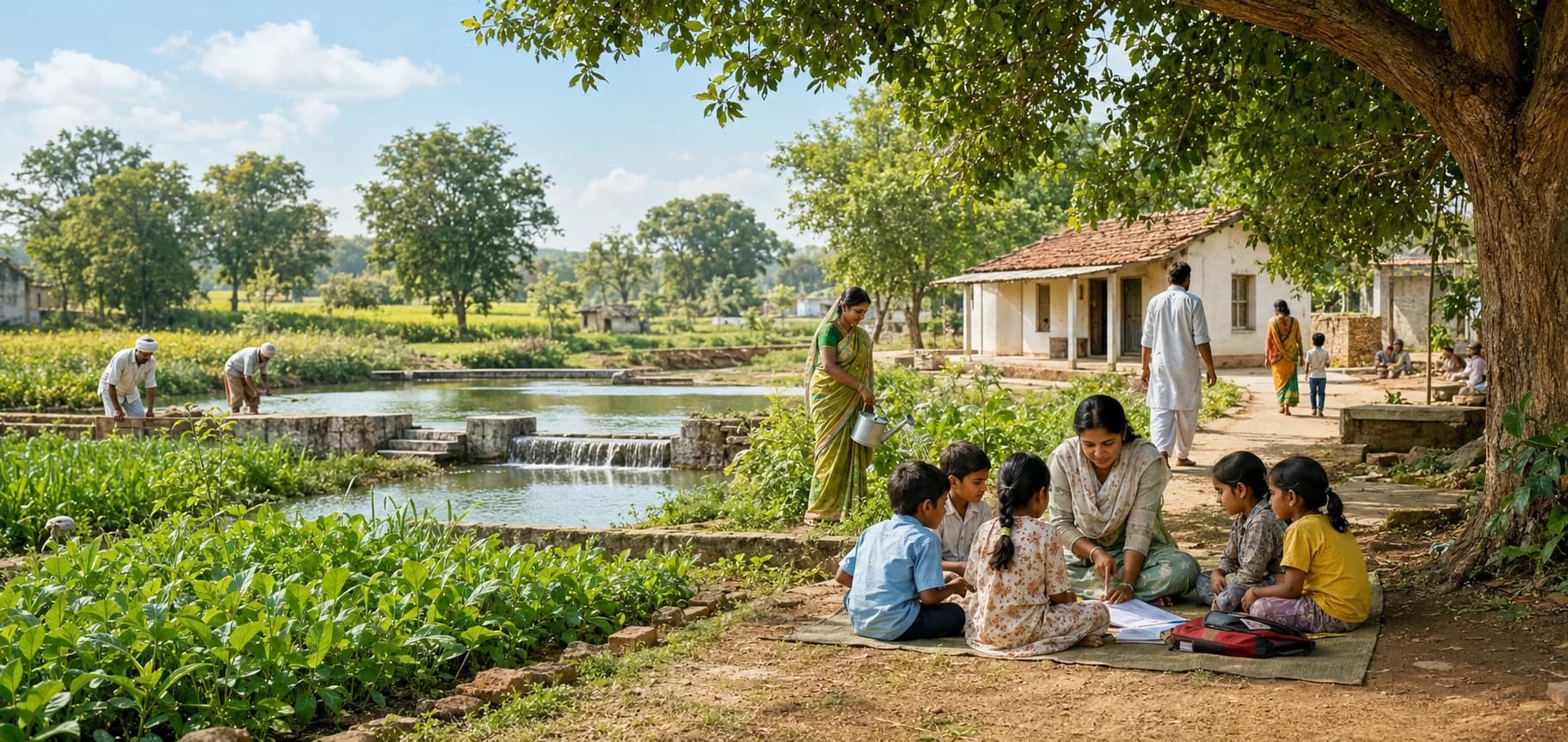
Several watershed and water-harvesting structures were constructed in and around Gujra with community involvement.
The activities are intended to slow rainwater runoff, improve local water retention and support groundwater recharge.
Three important aspects of this work include:
- ✓Local LeadershipThe Sarpanch helped bring the learning from Hiware Bazar into discussions and activities within Gujra.
- ✓Residents' ParticipationCommunity members contributed to practical conservation activities, treating local water management as a shared concern.
- ✓Locally Relevant StructuresThe work focused on water conservation arrangements suited to the village and its surrounding area.
Water as a Shared Resource
Water availability affects drinking water, agriculture, livestock and everyday household activities.
The Gujra initiative provides a starting point for developing greater community involvement in decisions about water resources.
Community Participation in Water Planning
The existing conservation work can be supported through continued attention to seasonal water availability, local usage patterns, maintenance and collective decisions.
Developing Village-Level Water Management
The next stage focuses on developing a more systematic approach to water resource management.
These activities can support better planning and continued involvement of the village community.
Learning Applied to Local Conditions
Gujra's experience illustrates how an exposure visit can contribute to practical work within a village.
The connection between learning, local leadership and residents' participation has supported the development of water conservation activities suited to the village's circumstances.