Bodra
Jeevan Vidya Study and Community Participation Across Villages
Bodra and its neighbouring villages in the Magarlod region have a continuing association with Jeevan Vidya–Sah-Astitva study and community dialogue.
Families, teachers, farmers and young people have participated in educational gatherings and practical initiatives relating to village life. An important feature of this experience is the involvement of several neighbouring villages and the continuity of participation across generations.
A Cluster of Participating Villages
Magarlod Block, Dhamtari, Chhattisgarh
Bodra, Kapalphodi, Badi Kareli, Mandraud
Jeevan Vidya–Sah-Astitva study and dialogue
Families, teachers, farmers and young people
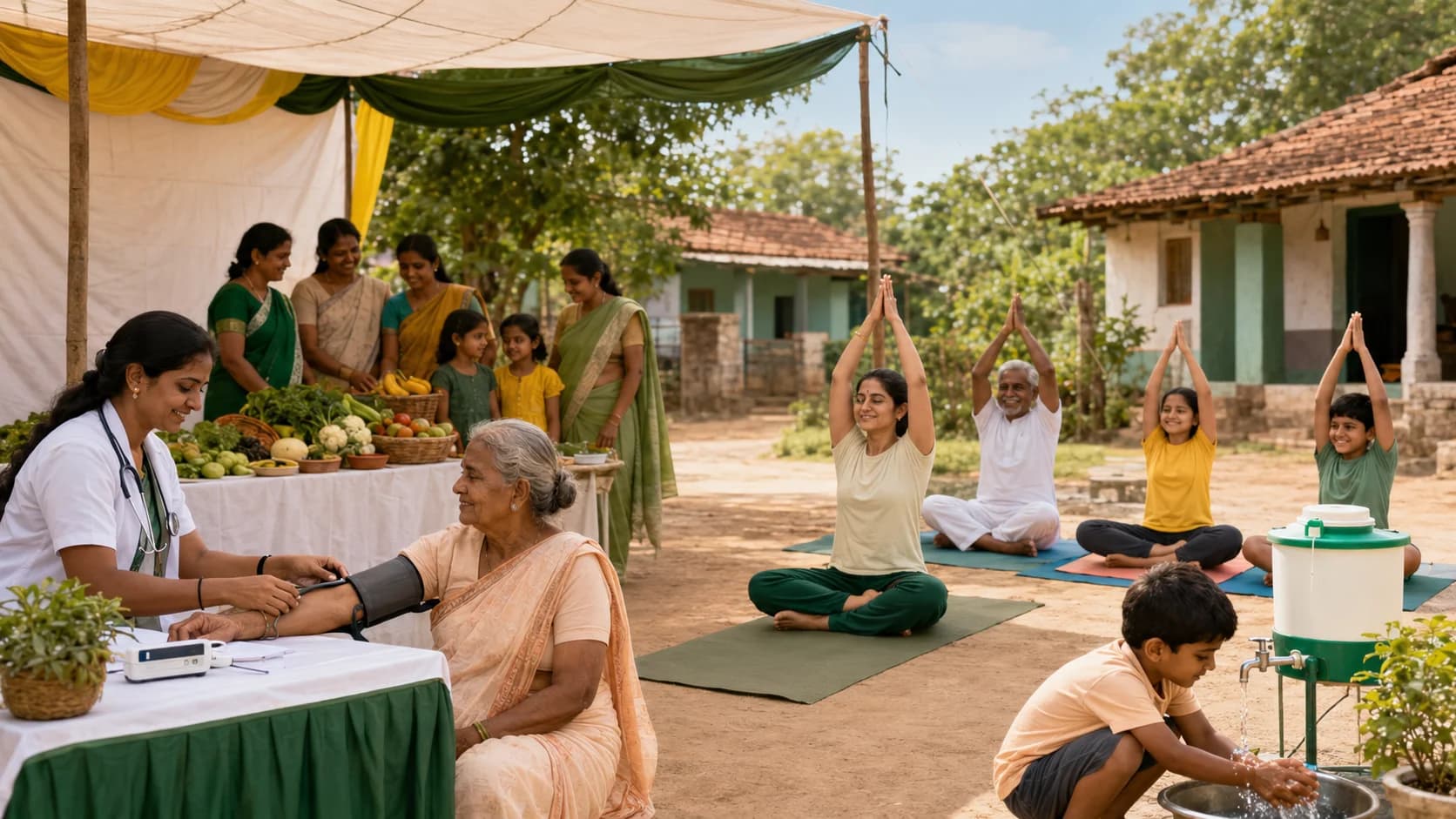
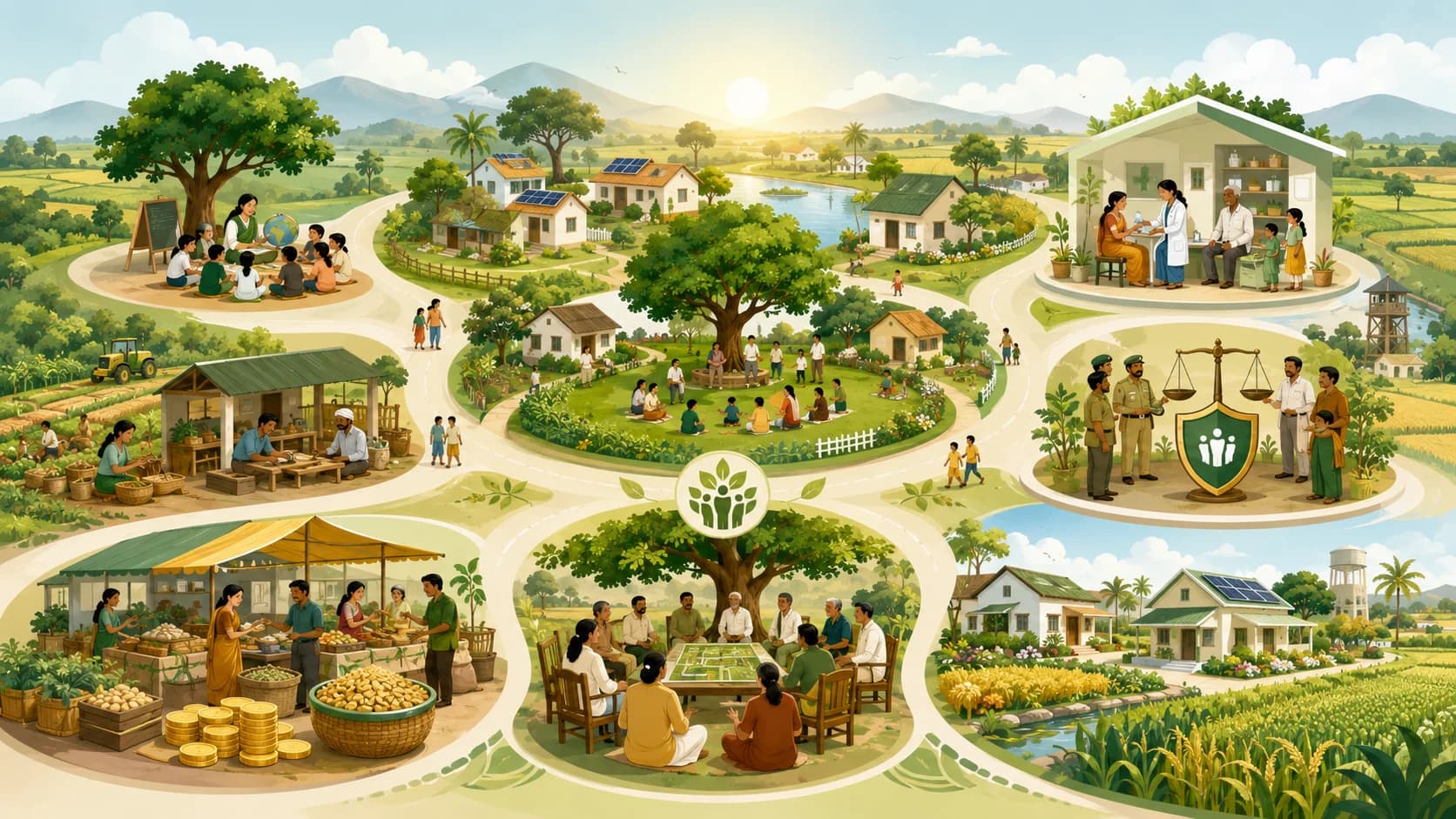
Education, family gatherings, agriculture, shared resources and health
An Association Across Generations
The association of this village cluster with Jeevan Vidya began through interested teachers and families in Kapalphodi.
Shri A. Nagraj Ji also visited Kapalphodi. Participation subsequently developed through introductory workshops and continued study gatherings.
As more families became involved, these activities extended to Bodra, Badi Kareli, Mandraud and nearby villages.
Over time, younger members of participating families began attending their own study gatherings and contributing to local activities.
This continuation across generations has supported the involvement of both adults and young people in educational and community initiatives.
Teachers and Students Participating in Value Education
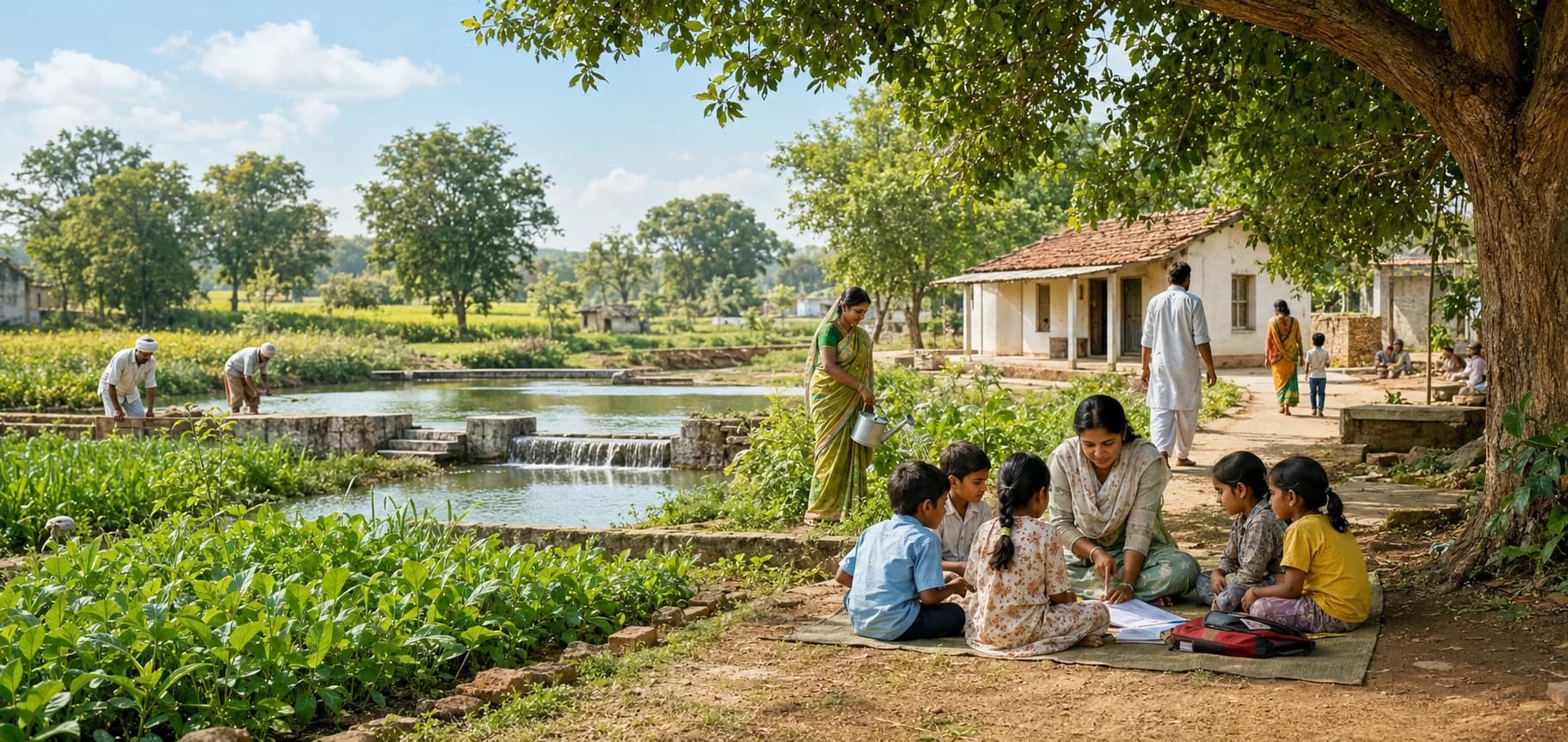
Schools have become important places for introducing Jeevan Vidya study and discussion in the village cluster.
At Saraswati Shishu Mandir in Bodra, teachers including Shankar Sahu and Vishnu Sahu have participated in introductory workshops and explored how value education can become part of children's learning.
Educational Participation
- BodraSaraswati Shishu MandirStudents: Approximately 250
- MandraudKabir Panth educational institutionStudents: Approximately 250
- Badi KareliSamvidhan AcademyStudents: 250–300
Alongside formal teaching, the work includes discussion of relationships, behaviour, responsibilities and participation in family life.
Community Activities
Regular Family Gatherings
Families in Bodra meet regularly in the evening, generally between 7:00 and 8:00 pm.
These gatherings provide opportunities to discuss personal experiences, family relationships and matters concerning the community.
The practice allows participants to continue their discussions beyond introductory workshops and maintain regular contact with one another.
Natural Farming and Plantation
Several farmers in the area have begun practising natural farming.
The community has also undertaken plantation activities and developed a small forested area through collective effort.
These initiatives reflect an interest in agricultural production that takes soil, water and long-term resource conservation into account.
Sharing Community Resources
One practical initiative involves the collective purchase and use of utensils, plates, bowls and chairs for weddings and other village events.
Participating families can borrow these materials without charge.
This arrangement reduces the need for each household to purchase items used only occasionally and makes common resources available for community functions.
Traditional Health Knowledge
Families exchange information about traditional remedies, locally available plants and health practices.
These discussions connect everyday wellbeing with food, agricultural practices and household routines.
Swades Foundation Visit
Representatives of Swades Foundation visited the village cluster and interacted with residents.
The visit provided an opportunity to observe family participation, cooperation and arrangements for sharing resources.
The interaction also brought attention to the community's continued engagement in educational and practical activities.
Areas of Continued Work
The village cluster's ongoing work includes several opportunities for further development.
Continued participation among families, educators and local residents provides a basis for these activities.
Continued Participation Across Villages
The experience of Bodra and neighbouring villages shows how regular study, shared activities and relationships among families can support sustained community participation.
The involvement of younger generations and cooperation across several villages are important aspects of this experience.